The Refusal to Perform: Why Female Characters Who Check Out Are Checking In to Something More Radical

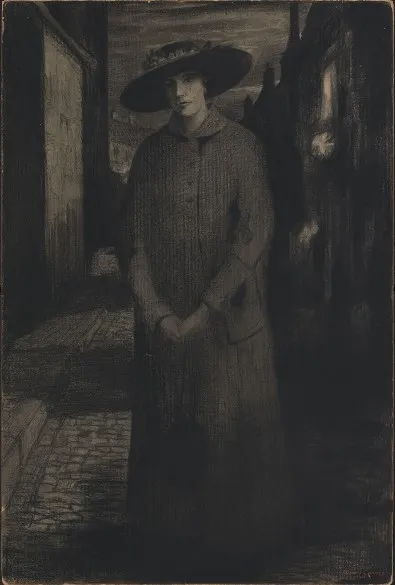
Photo: Unknown authorUnknown author, Public domain, via Wikimedia Commons
I want to make a case for the female character who cannot bring herself to care. Not the one who is secretly caring beneath a cool exterior — the one whose warmth is revealed in act three, whose emotional availability was merely deferred. I mean the character who is genuinely, structurally, philosophically uninterested in performing the engagement that the world around her requires. The one who sits through the dinner party with a face that offers nothing. Who receives the urgent news with a flatness that unsettles everyone in the room. Who is, in the most precise sense of the word, elsewhere.
This character is appearing with greater frequency in women-directed cinema, and she is being met, sometimes, with discomfort from audiences accustomed to a different bargain. I think that discomfort is the point.
What Women Have Always Been Asked to Perform
The demand for female emotional availability is so thoroughly embedded in social life that it has become nearly invisible — which is, of course, how the most durable demands sustain themselves. Women are expected to be warm, responsive, and emotionally present not merely in intimate contexts but in professional ones, in public ones, in the casual interactions of daily life. The woman who fails to smile when smiled at is rude. The woman who does not match the emotional register of the room is difficult. The woman who visibly withdraws from a conversation she finds tedious is, somehow, the problem.
Cinema has historically reflected and reinforced this expectation. The female protagonist who is emotionally unavailable is almost always explained — she has been hurt, she is protecting herself, she will eventually open up to the right person under the right circumstances. Her unavailability is a temporary condition with a narrative cure. The film's job is to administer that cure.
What happens when the film declines?
Flatness as Formal Choice
Women directors working in this mode are making a deliberate formal argument through their protagonists' affective withdrawal. The flat female character — the one who moves through the film's events without the expected emotional expressivity — is not a poorly drawn character. She is a precisely drawn one. Her flatness is information.
What it communicates, when the filmmaking is serious, is a portrait of what sustained emotional labor extraction actually does to a person. The character who has been required, across a lifetime, to be available, responsive, and warm — who has been the emotional infrastructure of every relationship and room she has occupied — has arrived at a place of profound and rational disengagement. Her boredom is not laziness. It is a verdict.
This is distinct from depression as it is typically rendered on screen, where a female character's withdrawal is coded as illness requiring treatment. The bored, flat, withdrawn protagonist of the films I am describing is not ill. She has simply stopped pretending that the demands placed on her are reasonable, and she has stopped performing compliance with those demands. The performance has ended. What remains is her actual self, and her actual self has decided it has better things to do than manage everyone else's feelings.
The Radical Passivity
There is a particular version of this figure who interests me most: the woman who is passive not because she lacks will but because she has directed her will inward, away from the external world's expectations. She does not act on the story. She does not drive the plot. She sits in the center of events and observes them with a detachment that the film refuses to pathologize.
This character is, in conventional narrative terms, a provocation. We are trained to expect protagonists who want things and pursue them — who are, in the most basic sense, in motion. The woman who is conspicuously still, who watches rather than participates, who is present in body but withheld in spirit, violates this expectation in ways that can feel alienating before they feel illuminating.
But alienation is sometimes the appropriate response. When a film produces a protagonist whose stillness reads as refusal — whose passivity is clearly chosen rather than imposed — it is inviting the audience to ask what, exactly, she is refusing. The answer, in the most interesting of these films, is comprehensive: she is refusing the entire set of performances that have been assembled around the category of womanhood. The nurturing. The warmth. The readiness to be moved. The willingness to be the room's emotional center.
She has seen the job description. She is not applying.
Boredom as Political Stance
I am aware that describing boredom as political risks sounding like a stretch. But I think it is worth sitting with the specific nature of what is being refused when a female character declines to be engaged. The demand for female engagement — for women to be interested, responsive, and emotionally generous — is not a neutral social preference. It is a demand that serves specific interests. It keeps women available. It keeps them oriented toward others. It keeps them in the relational labor that holds social structures together while remaining largely uncredited and uncompensated.
The female character who is conspicuously bored — who looks at the thing she is supposed to care about and simply does not — is withdrawing from that labor. She is declining to be the room's emotional infrastructure. And in doing so, she makes visible, through her absence, exactly how much work that infrastructure requires.
This is the formal insight that the best of these films achieve: by showing us a woman who has stopped performing, they show us, in negative space, everything she was performing. The demand becomes legible precisely at the moment of its refusal.
What We Owe These Characters
Audiences accustomed to emotionally expressive, relationally available female protagonists may find themselves frustrated by the flat heroine. This frustration is worth examining rather than simply satisfying. The impulse to want her to open up, to warm up, to meet the film's emotional invitations — that impulse is precisely the demand the film is interrogating.
What we owe these characters, I would argue, is the patience to sit with their withdrawal without immediately seeking its cure. To resist the narrative instinct that tells us her flatness is a problem requiring resolution. To consider the possibility that her disengagement is not a failure of feeling but an expression of it — a feeling so thoroughly rational, so historically earned, that it has moved beyond performance into something quieter and considerably more honest.
The female character who refuses to perform engagement is not absent. She is, in her own register, more present than anyone else in the room. She is simply present on her own terms, which are the only terms, finally, that matter.