The Metric Is Broken: Why the Tools We Use to Measure Female Representation Have Failed Us — and What to Use Instead

Alicia Bechdel's 1985 comic strip introduced three deceptively simple questions: Does the film contain at least two named women? Do they speak to each other? Do they discuss something other than a man? Nearly four decades later, these questions have calcified into the dominant popular framework for evaluating female representation in cinema — and they are no longer adequate to the task. Not because they were wrong when they were conceived, but because the landscape of both filmmaking and feminist critique has grown considerably more complex than a three-part checklist can accommodate.
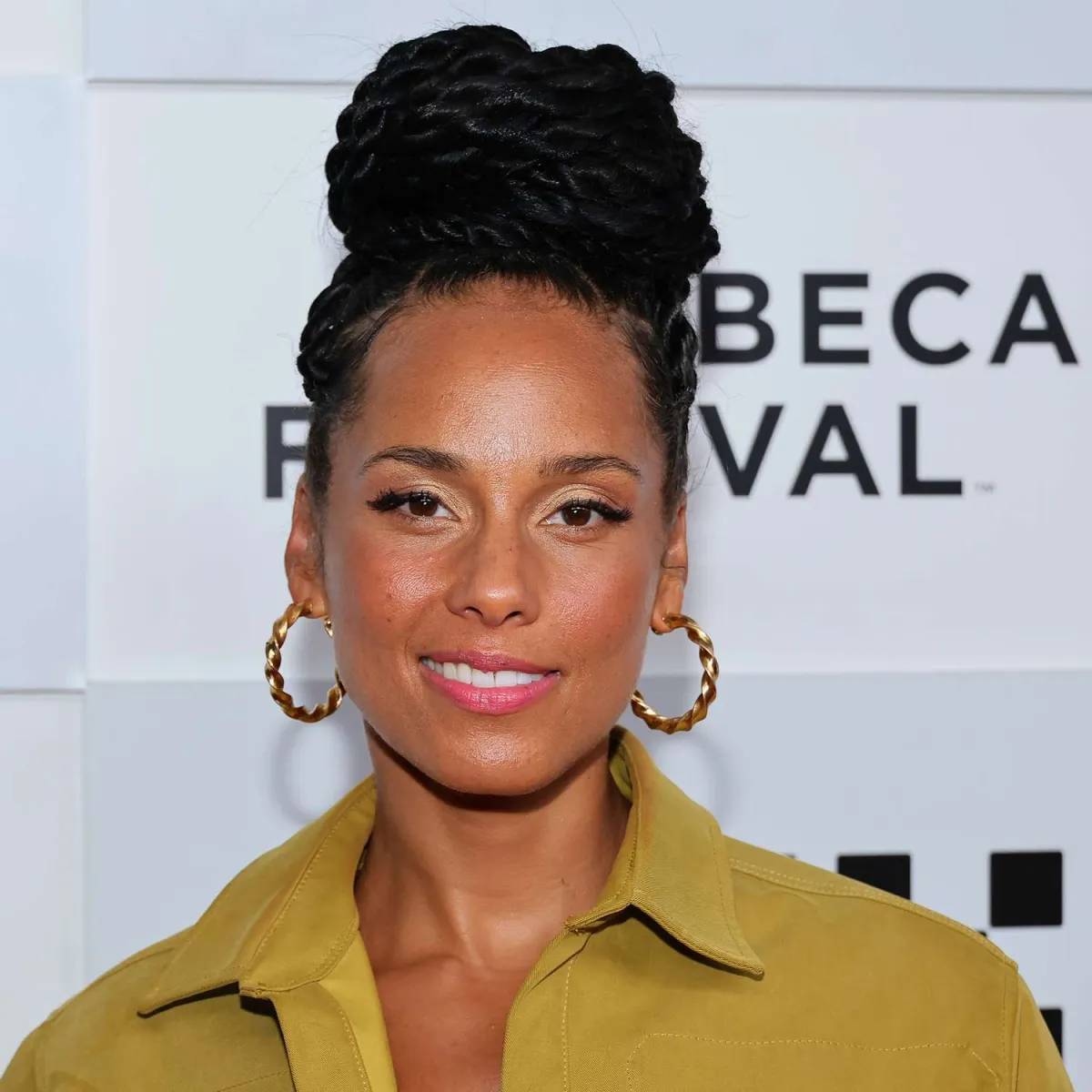 Photo: Alicia Bechdel, via www.byrdie.com
The Bechdel Test was always intended as a provocation, not a rubric. Its power lay in how embarrassingly many films failed it. But today, a film can pass the Bechdel Test while still fundamentally failing its female characters — and some of the most authentic, artistically serious works of female-centered cinema technically fail it. If our critical tools are producing false positives and false negatives at this rate, they need to be replaced.
What the Bechdel Test Cannot See
Consider the ways in which a film can satisfy the test's requirements while remaining deeply hostile to women's interiority. Two named female characters can discuss a business transaction, a battle strategy, or a supernatural threat — and the conversation can still exist entirely in service of a male protagonist's journey. The test measures surface-level presence. It cannot measure narrative agency, which is the far more consequential variable.
Narrative agency — the degree to which a character's choices meaningfully drive the plot rather than react to the choices of others — is arguably the most important dimension of authentic female-centered storytelling. A female protagonist who passes the Bechdel Test but whose story begins and ends in response to what a man does or wants is not, in any meaningful sense, the author of her own narrative. She is a reactive figure in a story that belongs to someone else.
Conversely, a film like Aftersun — which centers almost entirely on the relationship between a father and his young daughter — might be argued to technically fail the test in some readings, yet it represents one of the most penetrating explorations of female memory and grief in recent American cinema. The test tells us nothing useful about this film's relationship to women's experience.
The Problem of Performative Feminism
The more urgent issue in contemporary cinema is not the absence of female characters — studios have largely internalized the commercial and reputational value of including them — but the rise of what might be called performative feminism: the deployment of feminist aesthetics and rhetoric in service of narratives that do not actually prioritize women's stories or perspectives.
This phenomenon is sophisticated enough to evade simple metrics with relative ease. A film can feature a female protagonist who delivers speeches about female empowerment, pass the Bechdel Test with room to spare, and still be fundamentally structured around male gaze, male validation, or the rehabilitation of a male character's arc. The packaging has become fluent in the language of representation. The content has not always followed.
Identifying performative feminism requires critical frameworks that look behind the frame — at who is making decisions about how women are portrayed, not merely at the portraits themselves.
Toward a More Demanding Critical Vocabulary
What might more useful evaluative frameworks actually look like? Several approaches deserve serious consideration by cinephiles committed to honest assessment of female-centered storytelling.
Production accountability asks who holds creative authority over how female characters are written and depicted. A film directed, written, and produced by women is not automatically more authentic in its female representation than one made by men — but the question of who controls the narrative apparatus is not irrelevant. When women occupy decision-making positions throughout the production pipeline, the probability of female interiority being treated with genuine seriousness increases meaningfully. The Alliance of Women Directors and similar organizations have long argued that representation behind the camera is inseparable from representation on screen, and the evidence supports them.
Intersectional specificity examines whether a film's female characters have identities that are fully inhabited rather than gestured at. A Black woman protagonist whose Blackness is incidental to her character — present in her appearance but absent from her inner life, her relationships, and the specific pressures she navigates — is not a more authentic representation than a white female protagonist simply by virtue of casting. Authentic intersectional representation requires that a character's race, class, sexuality, disability, or other identity dimensions be integrated into the story's texture, not appended to it.
Narrative consequence considers whether a female character's choices generate genuine plot consequences or whether her agency is illusory — present in small moments but ultimately overridden by the decisions of male characters or the demands of genre convention. A heroine who appears to drive her own story but whose climactic choices are enabled, validated, or resolved by a male figure has limited narrative consequence, regardless of how much screen time she occupies.
The male gaze audit — borrowed from Laura Mulvey's foundational 1975 essay and updated for contemporary cinema — asks not merely whether a female character is sexualized but whether the film's visual grammar positions her as a subject with an interior life or as an object of external observation. This is a more nuanced question than it might appear, because sexuality and subjectivity are not mutually exclusive. A female character can be depicted as a sexual being while remaining the unambiguous author of her own desire. The question is whether the camera's perspective aligns with her interiority or with an imagined external spectator.
 Photo: Laura Mulvey, via whatson.bfi.org.uk
Holding the Industry Accountable
Adopting more sophisticated critical frameworks is not merely an academic exercise. It has practical implications for how cinephiles spend their money, how critics allocate their attention, and how the industry receives feedback on what constitutes meaningful progress.
Studios are responsive to cultural signals, and for years, the Bechdel Test provided a low bar that was easy to clear and easier to publicize. Raising the critical standard — demanding not just the presence of female characters but the full weight of their interiority, their agency, and their specificity — sends a different signal. It communicates that audiences are not satisfied with representation as performance. They are interested in representation as genuine creative commitment.
The heroines who matter most in contemporary cinema are not those who exist to satisfy a checklist. They are the ones whose stories could not have been told any other way — whose particular humanity is so fully realized that no simpler version of them would suffice. Our critical tools should be capable of recognizing that distinction. The Bechdel Test, for all its historical value, cannot do that work alone. It is time to build better instruments.