When the Camera Lies: How Women Directors Are Making Subjectivity a Visual Argument
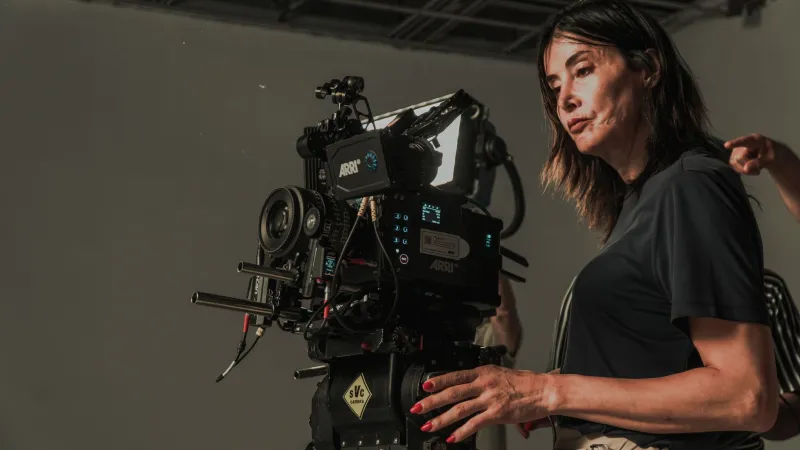
There is a long-standing assumption embedded in classical filmmaking: that the camera is a neutral witness. It records. It observes. It presents. The ideology of the objective lens has shaped audience expectations for over a century, training viewers to accept the frame as a reliable contract between filmmaker and spectator. What a growing number of contemporary female directors have recognized — and are now exploiting with considerable sophistication — is that this contract was never neutral to begin with. It was authored, almost entirely, by men.
The corrective is not simply to place women in front of the camera more often. It is to dismantle the grammar of the image itself.
Framing as Argument
When Lynne Ramsay places her camera at oblique angles in We Need to Talk About Kevin, she is not making an aesthetic choice divorced from meaning. She is constructing an argument about how Eva Khatchadourian — played with devastating restraint by Tilda Swinton — perceives a world that has already rendered its verdict on her. The skewed compositions, the intrusive close-ups on peripheral details, the way the frame refuses to settle into comfort: all of it literalizes a psychological state that conventional staging could never approximate. The audience does not merely observe Eva's guilt and grief. They are made to inhabit the visual logic of a woman whose perception has been warped by trauma and social condemnation.
This is the distinction that separates subjective cinematography from mere stylization. Style serves the image. Subjectivity interrogates it.
Chloe Zhao's work, particularly in Nomadland, operates through a different but equally deliberate visual vocabulary. Her use of natural light and expansive landscape photography might initially read as documentary realism — and that reading is precisely the trap she sets. The camera's apparent transparency, its willingness to simply watch Fern move through the American West, masks an argument about invisibility. Women of a certain age, a certain economic precarity, a certain refusal to conform to domestic expectation, are not seen by the culture that surrounds them. Zhao's camera sees them with extraordinary care, but its gentleness is not passive. It is a rebuke.
Color as Interior Architecture
Perhaps no visual tool has been more aggressively reclaimed by female directors than color grading. The manipulation of palette — the decision to saturate, desaturate, shift toward warmth or clinical cold — has historically been employed to signal genre or period. In the hands of filmmakers like Greta Gerwig and Emerald Fennell, it becomes something closer to emotional cartography.
Barbie's hyper-saturated Technicolor dreamscape is easy to dismiss as nostalgic pastiche until the film deliberately begins to drain that saturation as Barbie's consciousness expands. The color is not decoration; it is ideology made visible. When the palette shifts, the audience registers something has broken — not in the world of the film, but in the system of belief the world of the film was built to sustain. Gerwig uses color the way a novelist uses unreliable narration: to make the audience complicit in a fiction, and then to show them the seams.
Emerald Fennell's Saltburn takes a more predatory approach. The film's golden, amber-drenched visual warmth functions as a seduction — of Oliver Quick, yes, but more pointedly of the audience. The beauty of the image is the argument Fennell is making about how privilege insulates itself from scrutiny. We trust what is beautiful. We extend charity to what looks like it belongs in a painting. By the time the film's final act arrives and that warmth curdles into something genuinely disturbing, Fennell has demonstrated, through pure cinematographic means, that our aesthetic responses are not innocent.
The Unreliable Point-of-View Shot
The POV shot — the camera positioned to approximate a character's literal line of sight — is one of cinema's oldest mechanisms for generating identification. Horror has long exploited it to create predatory dread. Romance deploys it to engineer desire. What female directors are increasingly doing is using the POV shot to expose the gap between what a woman sees and what the audience has been conditioned to believe about what she sees.
Karyn Kusama's The Invitation is a masterclass in this technique. The film anchors itself almost entirely within Will's perspective, but Kusama is careful to seed doubt about his reliability as an observer without ever confirming or denying his paranoia until the final moments. What the film is actually doing — and what becomes clear in retrospect — is demonstrating how male perception, presented as the default interpretive framework, can entirely occlude the experience of the women in the room. The POV shot that was supposed to give us access gives us, instead, a portrait of selective vision.
Celine Sciamma's Portrait of a Lady on Fire approaches the problem from the opposite direction. By constructing the film around a female gaze — Marianne's painter's eye studying Héloïse — Sciamma forces audiences to occupy a position of looking that mainstream cinema rarely offers them. The effect is disorienting in the most productive sense. Viewers accustomed to the male gaze as a default setting find themselves recalibrated, made aware of how much interpretive assumption they carry into any act of watching.
What Audiences Are Being Asked to Do
The cumulative effect of these techniques is not merely aesthetic enrichment. It is an epistemological challenge. These filmmakers are asking audiences — particularly American audiences, steeped in a mainstream cinema tradition that prizes narrative transparency and emotional legibility — to become conscious of their own perceptual habits.
To watch a film by Ramsay or Zhao or Fennell with genuine attention is to acknowledge that seeing is not neutral. That the frame has always been an argument. That what feels like objective reality on screen is, in fact, a series of choices made by someone with a particular relationship to the world being depicted.
For women directors, this is not an abstract philosophical exercise. It is a correction of the historical record. Cinema has, for most of its existence, told women what they look like from the outside. These filmmakers are insisting on the right to show what looking feels like from within — and they are using the camera not as a mirror, but as a map of territory that has never been adequately charted.
The camera, it turns out, does not lie neutrally. It has always lied on behalf of someone. The question these directors are forcing into the open is simply: on whose behalf should it lie now?